
How To Create A Weekly Plan & Get Things Done!
Can you work and homeschool without missing deadlines, appointments, or the one thing you promised to do this week? Yes. A weekly plan is how I made it work.
A weekly plan is a single page where you map your work hours, homeschool time, appointments, and top priorities before the week begins. You can create one in 5 steps: gather your schedules, review last week, choose your priorities, fill in your planner, and add white space and buffer blocks.
I know. It sounds like one more thing on the list. But as a working mom who homeschooled for 14+ years, a planner is the only way I kept track of everything. You do not need a Pinterest-perfect system. You need one that works when someone asks for a snack the second your work call starts.

If you have a planner, you might wonder how to create a weekly plan that helps you get organized.
As a working mom who is homeschooling, using a planner is the only way I’ve managed to keep track of all the tasks in my life.
A weekly plan helps me see the big picture of exactly what is going on in my life and allows me to manage my time wisely.
A weekly plan is the best way to track social activities for kids, your work schedule, and any appointments or deadlines that you have coming up.
I have free planning pages that I use to create my weekly plan. Sign up below to get your own copy.

When you know what is on your calendar for the week, you can plan your week accordingly, making the best use of your time.
Why Should You Weekly Plan
The goal of your weekly plan is to help you stay organized, be more productive, and know what needs to be done that week.
Creating a weekly plan allows you to juggle the demands of your job, homeschool your kids, organize your goals, and take care of the home and other tasks all in one place.
You should plan each week because very few of us have the exact same schedule week after week.
Even if you have a 9-5 job, the kids’ activities, cleaning schedule, family obligations, and appointments no doubt change.
Weekly planning, done well, helps you organize these tasks so you won’t miss the important ones while still giving you downtime to rest and recharge.
What Should You Include In A Weekly Plan?
What is included in a weekly plan will depend on what works for you.
Some people need to have every single detail written out, others can use one word to represent many tasks.
For example, I can write “Homeschool” in my weekly planner to know that during that time block, I am homeschooling the kids.
You might need to write, “Math-1 lesson, Read aloud 30 minutes, Spelling one page…” and so on to feel organized.
Remember to plan in a way that makes sense for you.
I created the Homeschool Planner For Working Moms, shown in the image below, to include different layouts depending on what you want in your weekly plan.

A few things you could include in your weekly plan are:
- Work hours
- Work projects, deadlines, or tasks
- Homeschool hours
- Homeschool activities (group and family)
- Homeschool projects
- Meal plans
- Self-care
- Top priorities
- Weekly Review
- Habit Tracking
- Notes

What Is The Best Planner For A Working Homeschool Mom?
There are a ton of planners available to you; however, the best planner is one you can customize to include the things you want and leave the ones you don’t.
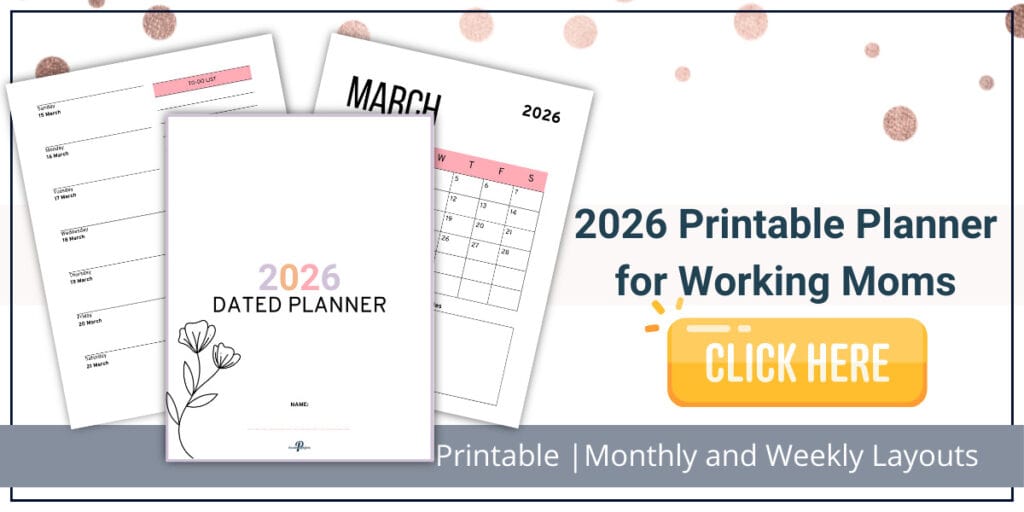
I created 2 types of planners for working homeschool moms. The undated one shown here and a printable dated one.
You can also use digital planners such as Homeschool Planet, Google Calendar, or a Trello Board.
The best planner is the one you’ll use!
How Do You Create A Weekly Plan In 5 Steps?
Now that you know what you want to include in your weekly plan, it is time to create the plan for the week.
Step 1: Gather Your Supplies
The first thing you need to do is gather your supplies.
Along with your planner, you will need all the schedules for the week.
Schedules might include:
- The work schedule for you
- Spouse’s work schedule
- Homeschool schedule
- Extracurricular events
- Appointments: Doctor, Hair, Clients, etc
- Trips or vacation days
- Special events or social events
- Date nights/game nights etc.
You will also want your favorite planning supplies, such as pens, sticky notes, highlighters, stickers, washi tape, colored pens, page markers, paper clips, and more!
Disclosure: I may receive commissions for purchases made through links in this post.
PILOT Pen 17478 FriXion Synergy Clicker Erasable, Refillable & Retractable Gel Ink Pens, Extra Fine Point, Assorted Ink Colors, 7-Pack 110 Pcs Rose Gold Cute Paper Clips Assorted Sizes and Shapes of Heart, Love, Letter, Book and Coffee Cup Small Bookmark Clips for School Office Home Wedding Women Girls Students Stainless SteelTWOHANDS Highlighter,Pastel Colors,Chisel Tip Marker Pen,6 Assorted Colors, for Adults & Kids,School Supplies,with Large Ink Reservoir for Extra Long Marking Performance 2007


I created a list of some of my favorite planning things here. You’ll want the planning and time management list!
2. Review Last Week
The next step is to consider how last week went.
With homeschooling especially, I find what worked one week may not work the second week. Take some time to consider how the last week went and what adjustments need to be made.
A few questions to ask yourself when you are reviewing your schedule are:
- Do I need more time for a few activities?
- Did my work schedule change?
- At what point do I feel overwhelmed?
- What can be moved or adjusted to lessen the load on me?
- What is working great?
- What isn’t?
Taking note of these things will allow you to adjust your plan for this week.
Reviewing and adjusting are key to making your weekly plan work for you.
3. Choose Your Priorities
What are your goals for the week? What are tasks that must get done this week? If your head is too full to choose priorities, start with a brain dump.
One thing to keep in mind about working and homeschooling is that you need to “juggle.”
Juggling is not “balance.”
When many think of balancing their career with homeschooling, they think of equal amounts of time and energy spent on both tasks.
But you can’t divide your life into equal parts, or you’ll run out of hours in the day. Balance means giving equal time and energy to everything. Juggling means your priorities change as needed, day by day.
For example, if you work 8 hours, homeschool for 8 hours, sleep for 8 hours, and commute for 2 hours, you ran out of time a while ago, and you have no time to eat, shower, do errands, and self-care.
That is not practical or sustainable.


When you juggle, your priorities change as needed.
One day your focus might be on homeschooling, and your work and house cleaning may take a back seat.
The next day, work might need to be in first place, and homeschooling is on the back burner.
This is where identifying your priorities is vital and one of the best productivity tips for working moms.
Take some time now to see what needs to be a priority this week and what days they need to come first.
4. Fill In Your Planner
Now the fun stuff!
Start with any tasks that include a time or deadline. These are tasks you can’t miss!
Next, add items you can’t move, such as live events, kids sporting events, or work meetings.
Then you can add more flexible tasks such as homeschooling, grocery shopping, field trips, and park days.
Don’t forget to add in time to recharge, we don’t want to be burning out.
Below is my personal weekly plan as an example for you. In my own weekly plan, homeschool tasks are in light blue and work tasks are in pink. Some of them overlap, which works because my teenagers can work independently. That may or may not work for your family, so keep your own needs in mind.

This works because I have teenagers who can work independently; again, you may not have kids that can do that yet. So adjust and plan for your family!
5. Create White Space And Buffer Blocks
As you fill in your planner, you may notice that some of those non-priority tasks just aren’t going to fit into the weekly plan.
I call them “nice to do” tasks. For me, it is usually decluttering or some household project that I’d love to do but if it doesn’t get done, no one is going to go hungry, you know?
I jot them down in my notes section. If something gets moved or canceled, I can tackle one of those projects.
Also, make sure you have time between tasks to transition from one task to the next. I like to have anywhere from 5-15 minutes, depending on if I am working at home or at the office.

If I am running errands, I include travel time.
Make sure you schedule in buffer time for travel distance and traffic, and time to eat and change your clothes.
Along with getting ready in the morning and having downtime at night.
White space is important.
Don’t fill in every single little space you have available if possible. Allow space to accept that spontaneous cup of coffee with a friend, hike in the woods with your kids, or long chat on the phone with your mom.
Otherwise you face getting homeschool burnout and no one wants that!
Weekly Planning Tips
- Block off time each week to plan, and set a phone reminder.
- Do not fill every space. Leave room to adjust.
- Make your planner something fun, because you will use it more.
If you need help figuring out how to organize your life to get things done, check out our free planning email course.
Make sure to block off time each week to do your weekly planning. I like to create a reminder on my phone.
Don’t fill up every space on your weekly plan. You need space to adjust and be flexible.
Have fun with your planner. Your planner is only a tool, but a pretty tool or one that is fun, you are more likely to use it!
Create Your Weekly Plan
You are now set to create a weekly plan that works with your working homeschool mom life.
I hope you found this guide helpful.
Creating a weekly plan will help you be productive, more organized, and less stressed.
Weekly Plan FAQ
Can you work and homeschool at the same time?
Yes, but not by splitting your day into equal halves. Working and homeschooling is about juggling, not balance. Some days homeschool comes first and work waits. Other days it is the opposite. A weekly plan helps you decide which one leads on which day so nothing important gets dropped. It is hard, and it can be done.
How do you create a weekly plan?
Gather your schedules and supplies, review how last week went, choose your priorities, fill in your planner, then add white space and buffer blocks. When you fill it in, start with anything that has a time or deadline, then add things you can’t move, then your flexible tasks.
What should be included in a weekly plan?
Work hours, work deadlines, homeschool hours, activities, meal plans, self-care, top priorities, a weekly review, habit tracking, and notes. You do not need all of them. Some moms write one word like “Homeschool” in a time block, and others list every lesson. Use the level of detail that helps you feel organized.
How much buffer time should you schedule between tasks?
I leave 5 to 15 minutes between tasks, depending on whether I am working at home or at the office. If you are running errands, add travel time, time to eat, and time to change. Leave some open white space too, for a spontaneous cup of coffee with a friend.
How often should you make a weekly plan?
Every week, because very few of us have the same schedule week after week. Even with a 9-to-5 job, kids activities and appointments change. Block off the same time each week and set a phone reminder so it actually happens.
📌Don’t let this post get lost in the internet abyss – pin it to your Pinterest board now!


Jen Mackinnon is a working homeschool mom and time management strategist who’s been juggling careers, kids, and homeschooling for 14+ years. She specializes in helping busy moms find simple, meaningful ways to celebrate milestones without adding stress to their schedules. On this blog, she shares practical systems and real-life strategies for working homeschool families.You are warmly invited to join the Online Community Here!